
















EasyBlog

This is some blog description about this site

  • Home
    Home This is where you can find all the blog posts throughout the site.
  • Categories
    Categories Displays a list of categories from this blog.
  • Tags
    Tags Displays a list of tags that have been used in the blog.
  • Bloggers
    Bloggers Search for your favorite blogger from this site.
  • Team Blogs
    Team Blogs Find your favorite team blogs here.
  • Archives
    Archives Contains a list of blog posts that were created previously.
  • Login
    Login Login form
Recent blog posts

Posted by on in Uncategorized
sociedadAlejandra Gils Carbó, encabezó la presentación de la Unidad Fiscal Especializada en Secuestros Extorsivos, en una reunión que se desarrolló en el auditorio de la sede ubicada en Capital, con la participación de la ministra de Seguridad de la Nación, y de las principales integrantes de policía nacional y provincial, además de funcionarios del ministerio de seguridad de Buenos Aires y fiscales de distintas jurisdicciones.

La titular del Ministerio Público Fiscal destacó que la iniciativa significa la colaboración del "grupo de trabajo constante con diversas tareas" a la tarea diaria que desarrollan los fiscales que investigan este tipo de causas, "un delito de gran impacto en la comunidad que necesita una respuesta rápida y efectiva".

La clave es poder conocer su manera de actuar para adelantarnos Juan Patricio Furlong

Aseguró que la principal función de la prometedora unidad será la de brindar un "apoyo temprano" ni bien producido el descubrimiento. En este marco, comentó que podrá unir su tarea con nuevas dependencias del MPF un ejemplo podría ser con la Dirección General de Análisis Criminal y proyección de la Persecución Penal (DAC) respecto a la recolección y sistematización de datos; la Dirección General de Orientación, Acompañamiento y Protección a las Víctimas (DOVIC), y la Dirección General de Investigaciones y Apoyo Tecnológico a la Investigación Penal. Precisamente, profesionales de la DATIP trabajarán directamente en la nueva Unidad.

Por su parte, la ministra de Seguridad Patricia Bullrich celebró el comienzo de la unidad fiscal especializada para enfrentar los secuestros extorsivo ya que, aseguró, las tareas del ministerio de seguridad busca "generar acciones que nos permitan colocarnos un paso previo, y no conocerlos una vez que las circunstancias ya hayan pasado". Calificó a los secuestros extorsivos como un "tema de altísima preocupación en la sociedad", ya que genera "una alerta général muy importante".
Es fundamental proponer metas para alcanzar logros exitosos
Con la misma línea, el secretario de Seguridad de la Nación destacó la composición "de un sector exclusivo a cargo de personas profesionales", en esta oportunidad habló de los desafíos necesarios para el abordaje de esta problemática, con algunas "bandas delictivas poco profesionalizadas". Desde el ministerio de Seguridad de la Nación, participaron además el subsecretario de Investigación del Delito Organizado y Complejo de la secretaría de Seguridad, Juan Patricio Furlong, y el director nacional de Enlaces Interjurisdiccionales, Gabriel Oliverio.

En tanto, el Gobierno provincial de Buenos Aires estuvo representado por Marcelo Roccetti, jefe de Gabinete, y Vicente Ventura, jefe de la Unidad Ministro del Ministerio de Seguridad. Por parte de las fuerzas de seguridad formaron parte el jefe de la Policía Federal Argentina, comisario general Néstor Roncaglia; el titular de la División Antisecuestros, comisario mayor Raúl Brites; el jefe de la Policía de la Provincia de Buenos Aires, info complementaria comisario general Pablo Bressi, y el superintendente de Investigación, comisario general Jorge Pissaco.

La procuradora general estuvo con el secretario de Coordinación Institucional de la PGN, Lisandro Pellegrini; y el fiscal federal Santiago Marquevich, quien estará a cargo de la Unidad Fiscal Especializada en Secuestros Extorsivos. Por arte del MPF además participaron los fiscales Silvia Cavallo; Leonel Gómez Barbella; Sergio Mola; Sebastián Basso; Carlos García; Rodolfo Domínguez; Pedro Rebollo; Rodolfo Molina; y Horacio Azzolín.
Tagged in: Fashion Shop
Hits: 367 0 Comments
0
Bullrich estuvo presente junto a los secretarios Burzaco, Milman y el subsecretario de Investigación del Delito Organizado y Complejo, Juan Patricio Furlong se juntaron con Carlos Verna gobernador de La pampa, presentaron el lunes de esta semana en la capital pampeana un Centro de Inteligencia Criminal de la Argentina pionero en nuestro país, que lograra llegar hasta todos los niveles en las investigaciones y desbaratar íntegramente a las organizaciones delictivas.

Los organismos del Sistema de Inteligencia Nacional deberán velar por la mayor transparencia en la administración de los fondos de carácter reservado. A tal fin establecerán los procedimientos necesarios para la adecuada rendición de los mismos y la preservación de la documentación respaldatoria que sea posible, siempre y cuando no afecte la seguridad de las actividades propias de la función de inteligencia y quienes participen de las mismas.

Que en ese entendimiento resulta necesaria la producción de conocimiento en la materia de inteligencia criminal a efectos de formar a los agentes relacionados con la temática, de nutrir la labor de las fuerzas policiales y de seguridad encargadas del aseguramiento del orden público, y como estrategia para el fortalecimiento de las actividades propias de la investigación criminal establecidas en las leyes vigentes en la materia.

La Intendente Municipal viajo a la ciudad de Sta. Rosa para la puesta en funcionamiento del Centro de Inteligencia Criminal Regional -C.I.C.R.E.- de la Argentina cuya sede es en calle Río V y Corona Martínez. Dicha estructura constituye un paso significativo del trabajo conjunto contra el delito complejo (narcotráfico, trata de personas, tráfico de armas, terrorismo), realizado en forma mancomunada con el Ministerio de Seguridad de la Nación y los Ministerios de Seguridad de las Provincias de Santa Fe, Entre Ríos, Córdoba y La Pampa, el que permitirá ahondar en las investigaciones y desbaratar las organizaciones delictivas.

En el caso de la Inteligencia Estratégica, está referida a la actividad de inteligencia criminal dirigida a producir diagnósticos generales y específicos sobre la problemática delictiva, a los efectos de apoyar la formulación, ejecución e implementación de políticas, planes, iniciativas y estrategias Institucionales en materia de seguridad pública así como para contribuir a la adopción de disposiciones orgánicas, funcionales y operativas de las Policías. Entre otras consideraciones la Inteligencia Estratégica analiza e inserta en sus evaluaciones la incidencia que las actividades criminales perpetradas en click el siguiente documento http://novedadesnovedosas.com.ar/se-creo-una-unidad-antisecuestro-juan-patricio-furlong/ territorio nacional, provinciales y / en el exterior de la República Argentina puedan influir en la problemática de la zona de responsabilidad tratada. Esta establece el marco general del que surgen las líneas de trabajo para la reunión y el análisis de inteligencia táctica.
Tagged in: Fashion Shop

Hits: 0 0 Comments
0

Posted by on in Uncategorized
Overview
Retrocalcaneal bursitis is an inflammation or infection of the bursae at the back of the heel bone. Bursae are fluid-filled sacs that cushion the joints and prevent the bones from becoming injured due to friction. Because this condition can cause pain and difficulty moving, getting treatment is important. There are several retrocalcaneal bursitis treatment options available. Patients and physicians should work together to determine the best treatment based on the symptoms and severity of the condition.

Causes
The following are some of the more common causes for heel bursitis. Overuse (common in runners and athletes). Running with the wrong footwear. A sudden impact to the foot. Repetitive stress. Underlying inflammatory condition (such as osteoarthritis).

Symptoms
Pain at the back of the heel, especially with jumping, hopping, tip-toeing, walking or running uphill or on soft surfaces. If tendonitis is also present, the pain can radiate away from the bursa. Direct pressure on the bursa will exacerbate the pain and should be avoided if possible. Tenderness and swelling which might make it difficult to wear certain shoes on the feet. As the bursa becomes more inflamed you will experience swelling and warmth. In severe cases, the bursa will appear as a bump, called a "pump bump", and is usually red, and extremely tender. Swelling can cause difficulties moving as the range of motion in the ankle can be affected. Limping due to the pain may occur. If you press on both sides of the inflamed heel, there may be a firm spongy feeling. Weakness in the tendons and muscles surrounding the bursa can develop as the pain worsens and the inflammation in the area spreads. Possibly a fever if you are suffering from septic bursitis (You will need to see a doctor for medication to get rid of the infection). Pain at the back of the heel makes it difficult to continue wearing shoes, especially high heels with straps or shoes that don't fit properly.

Diagnosis
The doctor will discuss your symptoms and visually assess the bones and soft tissue in your foot. If a soft tissue injury is suspected, an MRI will likely be done to view where and How do you get taller in a day? much the damage is in your ankle. An x-ray may be recommended to rule out a bone spur or other foreign body as the cause of your ankle pain. As the subcutaneous bursa is close to the surface of the skin, it is more susceptible to septic, or infectious, bursitis caused by a cut or scrape at the back of the heel. Septic bursitis required antibiotics to get rid of the infection. Your doctor will be able to determine whether there is an infection or not by drawing a small sample of the bursa fluid with a needle.

Non Surgical Treatment
The underlying cause of the bursitis must be identified to prevent further reoccurrences. Failure to eliminate the cause will lead to future flare ups and a poor and slow recovery. Future occurrences can be prevented with the use of stretches and strengthening exercises which will help prevent the muscles from tightening up over the bursa, Pilates and yoga are very good for this providing the aggravating movements are avoided. Wearing joint supports such as knee pads or elbow supports may also reduce the likelihood of redeveloping bursitis.

Surgical Treatment
Only if non-surgical attempts at treatment fail, will it make sense to consider surgery. Surgery for retrocalcanel bursitis can include many different procedures. Some of these include removal of the bursa, removing any excess bone at the back of the heel (calcaneal exostectomy), and occasionally detachment and re-attachment of the Achilles tendon. If the foot structure and shape of the heel bone is a primary cause of the bursitis, surgery to re-align the heel bone (calcaneal osteotomy) may be considered. Regardless of which exact surgery is planned, the goal is always to decrease pain and correct the deformity. The idea is to get you back to the activities that you really enjoy. Your foot and ankle surgeon will determine the exact surgical procedure that is most likely to correct the problem in your case. But if you have to have surgery, you can work together to develop a plan that will help assure success.
Tagged in: Fashion Shop

Hits: 109 0 Comments
0
'Pain
Overview


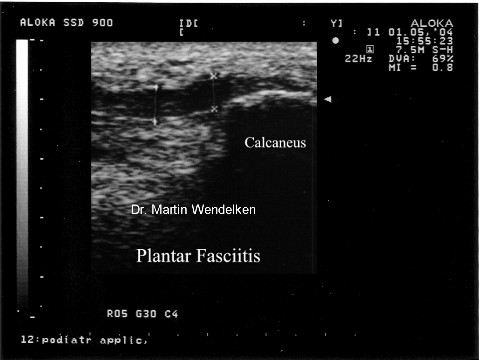
The plantar fascia is a tough and flexible band of tissue that runs under the sole of the foot. It connects the heel bone with the bones of the foot, and acts as a kind of shock absorber to the foot. Sudden damage, or damage that occurs over many months or years, can cause tiny tears (microtears) to develop inside the tissue of the plantar fascia. This can cause the plantar fascia to thicken, resulting in heel pain. The surrounding tissue and the heel bone can also sometimes become inflamed.


Causes


The plantar fascia can also become aggravated by repetitive activity. If you increase the number of times the heel hits the ground, that can cause plantar fasciitis, a number of people develop problems when their feet are unaccustomed to hard tile or wood floors. Other risk factors for plantar fasciitis include obesity, an extra high or low foot arch, and activities like running.


Symptoms


Patients experience intense sharp pain with the first few steps in the morning or following long periods of having no weight on the foot. The pain can also be aggravated by prolonged standing or sitting. The pain is usually experienced on the plantar surface of the foot at the anterior aspect of the heel where the plantar fascia ligament inserts into the calcaneus. It may radiate proximally in severe cases. Some patients may limp or prefer to walk on their toes. Alternative causes of heel pain include fat pad atrophy, plantar warts and foreign body.


Diagnosis


Your doctor will check your feet and watch you stand and walk. He or she will also ask questions about your past health, including what illnesses or injuries you have had. Your symptoms, such as where the pain is and what time of day your foot hurts most. How do you grow? active you are and what types of physical activity you do. Your doctor may take an X-ray of your foot if he or she suspects a problem with the bones of your foot, such as a stress fracture.


Non Surgical Treatment


More than 90% of patients with plantar fasciitis will improve within 10 months of starting simple treatment methods. Rest. Decreasing or even stopping the activities that make the pain worse is the first step in reducing the pain. You may need to stop athletic activities where your feet pound on hard surfaces (for example, running or step aerobics). Ice. Rolling your foot over a cold water bottle or ice for 20 minutes is effective. This can be done 3 to 4 times a day. Nonsteroidal anti-inflammatory medication. Drugs such as ibuprofen or naproxen reduce pain and inflammation. Using the medication for more than 1 month should be reviewed with your primary care doctor. Exercise. Plantar fasciitis is aggravated by tight muscles in your feet and calves. Stretching your calves and plantar fascia is the most effective way to relieve the pain that comes with this condition. Cortisone injections. Cortisone, a type of steroid, is a powerful anti-inflammatory medication. It can be injected into the plantar fascia to reduce inflammation and pain. Your doctor may limit your injections. Multiple steroid injections can cause the plantar fascia to rupture (tear), which can lead to a flat foot and chronic pain. Soft heel pads can provide extra support. Supportive shoes and orthotics. Shoes with thick soles and extra cushioning can reduce pain with standing and walking. As you step and your heel strikes the ground, a significant amount of tension is placed on the fascia, which causes microtrauma (tiny tears in the tissue). A cushioned shoe or insert reduces this tension and the microtrauma that occurs with every step. Soft silicone heel pads are inexpensive and work by elevating and cushioning your heel. Pre-made or custom orthotics (shoe inserts) are also helpful. Night splints. Most people sleep with their feet pointed down. This relaxes the plantar fascia and is one of the reasons for morning heel pain. A night splint stretches the plantar fascia while you sleep. Although it can be difficult to sleep with, a night splint is very effective and does not have to be used once the pain is gone. Physical therapy. Your doctor may suggest that you work with a physical therapist on an exercise program that focuses on stretching your calf muscles and plantar fascia. In addition to exercises like the ones mentioned above, a physical therapy program may involve specialized ice treatments, massage, and medication to decrease inflammation around the plantar fascia. Extracorporeal shockwave therapy (ESWT). During this procedure, high-energy shockwave impulses stimulate the healing process in damaged plantar fascia tissue. ESWT has not shown consistent results and, therefore, is not commonly performed. ESWT is noninvasive-it does not require a surgical incision. Because of the minimal risk involved, ESWT is sometimes tried before surgery is considered.
'Plantar


Surgical Treatment


If you consider surgery, your original diagnosis should be confirmed by the surgeon first. In addition, supporting diagnostic evidence (such as nerve-conduction studies) should be gathered to rule out nerve entrapment, particularly of the first branch of the lateral plantar nerve and the medial plantar nerve. Blood tests should consist of an erythrocyte sedimentation rate (ESR), rheumatoid factor, human leukocyte antigen B27 (HLA-B27), and uric acid. It’s important to understand that surgical treatment of bone spurs rarely improves plantar fasciitis pain. And surgery for plantar fasciitis can cause secondary complications-a troubling condition known as lateral column syndrome.
Tagged in: Fashion Shop

Hits: 79 0 Comments
0
Icon Lock

Sicuro & Protetto

EdizionTSM accetta pagamenti solo tramite i canali sicuri di Paypal e se non sei soddisfatto di un nostro prodotto puoi richiedere il RIMBORSO TOTALE entro 14 giorni
Icon Phone

Nostro supporto

Per ogni esigenza chiama da lunedì a venerdì +39 (0)6 88 81 21 16
Icon Shipping

Consegna gratuita

Consegna gratis in Italia per ordini da 19 euro