


Best sellers





Exercises To Help Accessory Navicular Syndrome

- Font size: Larger Smaller
- Hits: 321
- 0 Comments
- Subscribe to this entry
- Bookmark
Overview
Some people, possibly beginning in early adolescents, but perhaps later, How can you heal an Achilles tendonitis fast? develop a painful bump on the side of their foot. The pain may be worse after athletic activity or just normal walking, and walking itself may become painful. This pain may become constant, but it will tend to improve with continued rest. Depending on the size of the bump, it may rub against shoes, or cause pain if the bump is hit by something. Over time, the arch of the foot may be lost and a flat food will develop.
Causes
Just having an accessory navicular bone is not necessarily a bad thing. Not all people with these accessory bones have symptoms. Symptoms arise when the accessory navicular is overly large or when an injury disrupts the fibrous tissue between the navicular and the accessory navicular. A very large accessory navicular can cause a bump on the instep that rubs on your shoe causing pain.
Symptoms
The majority of people with an accessory navicular experience no symptoms, since, for the most part, the little extra bone simply isn?t large enough to cause problems. Unfortunately, some people lose on ?accessory navicular roulette,? and the bone begins to mess things up with the foot. These problems usually show up sometime in adolescence, when bones and cartilage in the body are settling into their final shapes (although occasionally people make it all the way through childhood, only to start experiencing discomfort and pain in adulthood).
Diagnosis
Diagnosis starts by speaking with the patient about symptoms. The physician will look at the foot and examine it for signs of an accessory navicular. By putting pressure on the area, the doctor may determine its presence simply by the presence of pain. The muscle, joint, and the overall structure of the foot may be considered, as well as the way in which the patient walks. If a diagnosis of accessory navicular syndrome is made, an X-ray or MRI may be ordered to confirm diagnosis.
Non Surgical Treatment
The goal of non-surgical treatment for accessory navicular syndrome is to relieve the symptoms. The following may be used. Immobilization. Placing the foot in a cast or removable walking boot allows the affected area to rest and decreases the inflammation. Ice. To reduce swelling, a bag of ice covered with a thin towel is applied to the affected area. Do not put ice directly on the skin. Oral nonsteroidal anti-inflammatory drugs (NSAIDs), such as ibuprofen, may be prescribed. In some cases, oral or injected steroid medications may be used in combination with immobilization to reduce pain and inflammation. Physical therapy may be prescribed, including exercises and treatments to strengthen the muscles and decrease inflammation. The exercises may also help prevent recurrence of the symptoms. Custom orthotic devices that fit into the shoe provide support for the arch, and may play a role in preventing future symptoms. Even after successful treatment, the symptoms of accessory navicular syndrome sometimes reappear. When this happens, non-surgical approaches are usually repeated.

Surgical Treatment
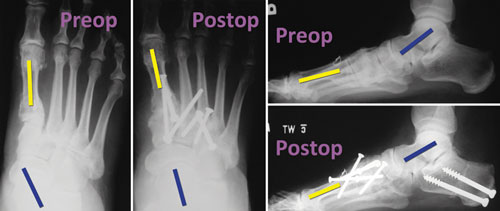
If your pain and discomfort don’t go away with treatments like these, then it may be time to consider surgery. If you decide to go through with it, your surgeon will probably remove the accessory navicular once and for all, and will tighten up the posterior tibial tendon in order to make it better able to support your arch. You’ll probably have to wear a cast for a several weeks, and a brace for some months after that, but with patience, you may be able to say goodbye to your symptoms.
Th1s1sanart1cl3s1te
Some people, possibly beginning in early adolescents, but perhaps later, How can you heal an Achilles tendonitis fast? develop a painful bump on the side of their foot. The pain may be worse after athletic activity or just normal walking, and walking itself may become painful. This pain may become constant, but it will tend to improve with continued rest. Depending on the size of the bump, it may rub against shoes, or cause pain if the bump is hit by something. Over time, the arch of the foot may be lost and a flat food will develop.
Causes
Just having an accessory navicular bone is not necessarily a bad thing. Not all people with these accessory bones have symptoms. Symptoms arise when the accessory navicular is overly large or when an injury disrupts the fibrous tissue between the navicular and the accessory navicular. A very large accessory navicular can cause a bump on the instep that rubs on your shoe causing pain.
Symptoms
The majority of people with an accessory navicular experience no symptoms, since, for the most part, the little extra bone simply isn?t large enough to cause problems. Unfortunately, some people lose on ?accessory navicular roulette,? and the bone begins to mess things up with the foot. These problems usually show up sometime in adolescence, when bones and cartilage in the body are settling into their final shapes (although occasionally people make it all the way through childhood, only to start experiencing discomfort and pain in adulthood).
Diagnosis
Diagnosis starts by speaking with the patient about symptoms. The physician will look at the foot and examine it for signs of an accessory navicular. By putting pressure on the area, the doctor may determine its presence simply by the presence of pain. The muscle, joint, and the overall structure of the foot may be considered, as well as the way in which the patient walks. If a diagnosis of accessory navicular syndrome is made, an X-ray or MRI may be ordered to confirm diagnosis.
Non Surgical Treatment
The goal of non-surgical treatment for accessory navicular syndrome is to relieve the symptoms. The following may be used. Immobilization. Placing the foot in a cast or removable walking boot allows the affected area to rest and decreases the inflammation. Ice. To reduce swelling, a bag of ice covered with a thin towel is applied to the affected area. Do not put ice directly on the skin. Oral nonsteroidal anti-inflammatory drugs (NSAIDs), such as ibuprofen, may be prescribed. In some cases, oral or injected steroid medications may be used in combination with immobilization to reduce pain and inflammation. Physical therapy may be prescribed, including exercises and treatments to strengthen the muscles and decrease inflammation. The exercises may also help prevent recurrence of the symptoms. Custom orthotic devices that fit into the shoe provide support for the arch, and may play a role in preventing future symptoms. Even after successful treatment, the symptoms of accessory navicular syndrome sometimes reappear. When this happens, non-surgical approaches are usually repeated.
Surgical Treatment
If your pain and discomfort don’t go away with treatments like these, then it may be time to consider surgery. If you decide to go through with it, your surgeon will probably remove the accessory navicular once and for all, and will tighten up the posterior tibial tendon in order to make it better able to support your arch. You’ll probably have to wear a cast for a several weeks, and a brace for some months after that, but with patience, you may be able to say goodbye to your symptoms.
Th1s1sanart1cl3s1te
Tagged in:
Fashion Shop
Author's recent posts
Icon Lock
Safe & Secure
EdizioniTSm offers secure payment service via PayPal and a 15day moneyback garantee Icon Phone
from monday to friday at
+39 (0)6 88 81 21 16
Our support
We're happy to help you call usfrom monday to friday at
+39 (0)6 88 81 21 16
Icon Shipping
In Europe on all orders of 30 €
Free Shipping
In Italy on all orders of 15 €In Europe on all orders of 30 €
